Author: maryelizabeth17

  • The Cost Of Control Percolating On The Big Burner

    Set Adrift On Memory Bliss – P.M. Dawn + Setting Sun / High Tide – Stennes

    I’ve been percolating on the big burner about how much detachment is inherently baked into the human experience (especially in your twenties). However, I not only need to become okay with this forced detachment outside my control,I also need to actively detach in my conscious experience as well (awesome, no worries love!!). It’s so simple it’s deceptive. Attachment is the root of all suffering. Therefore, to end suffering, end attachment. Easy as that, right? But GAH DAMN it feels so good to attach (until it doesn’t)! The illusory facade of “having control” feeds my ego and quiets my anxiety, creating a fragile sense of security. It isn’t until I’m inevitably reminded by forces beyond my control just how tightly I’ve been trying to grip grains of sand. For a feeling to carry such comforting weight, its undoing reveals just how fragile that comfort had always been.

    After all, “control” offers little more than the illusion of something tangible, something within my grasp. And sometimes, that illusion is comforting enough to keep me passive, causing me to overlook opportunities to expand and explore simply because they feel unfamiliar and vulnerable. I consider myself an honest person, even forthcoming, but I realize I don’t put myself in many vulnerable situations. And when I do, it’s on my terms (with people I trust, in environments I’m familiar with, etc). And I’m ready to wake up how that’s holding me back. I find it more natural to be completely vulnerable with myself, but I often struggle to elicit that same level of vulnerability when there are more variables outside of my immediate control.

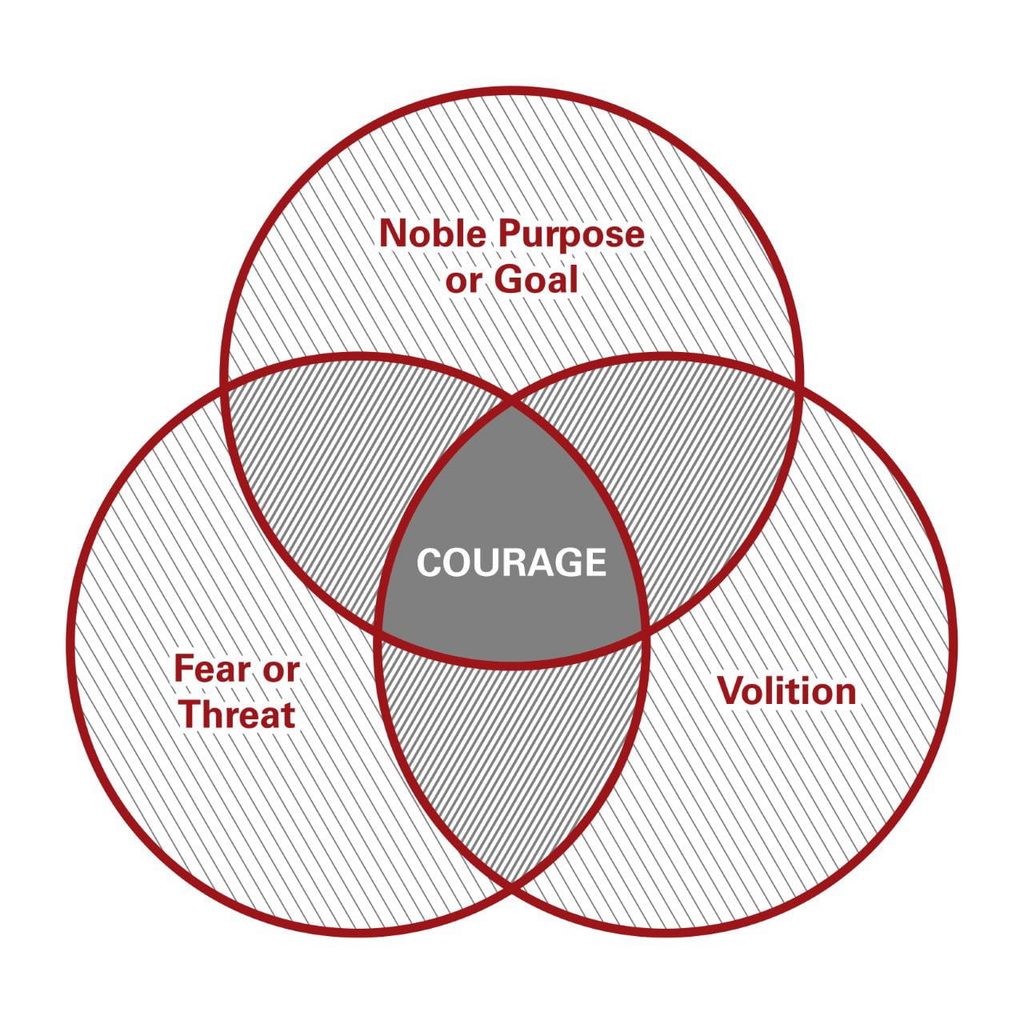
    ^^That being said, I think many people struggle to be vulnerable with others on such a revealing and consequential level. I don’t think that struggle is unique to me. But I do think it holds us back collectively. When we withhold vulnerability from one another, we also deny ourselves the intimacy, understanding, and possibility that can only exist when we allow ourselves to be fully seen. Vulnerability within ambiguity. Still unzipping the skin from my bones, fearless in the face of the consequences of my nakedness, despite the unknown, the uncertain, the unfamiliar. That, to me, is true courage. 

     Because what is courage when the outcome is already somewhat assured? Whether that guarantee comes in the form of something vague, like a premonition, or something concrete and tangible. Courage becomes less consequential when there is reason to believe you will land where you intended. I think true courage lives in the possibility that you won’t. In choosing to reveal yourself anyway, without knowing whether you’ll be received, understood, or changed by what comes next. 

    I want to grow in my courage in the face of the uncertain. I have always believed, and will forever know, that love is God’s breath within us. That I am the universe experiencing itself through a human vessel. That God lives within me, and because of that, I am never truly alone or without access to the highest vibration of consciousness. These truths shape the way I think, act, and believe, and give me an unwavering faith that, whatever happens, I will be (more than) ok in the long run.  However, that doesn’t make me immune to the stress, discomfort, and unfamiliarity of true courage. There is still something deeply unsettling about believing I’m on the right path, or doing the right thing, when I have no “proof” to quiet the suspicion that maybe I’m wrong. 

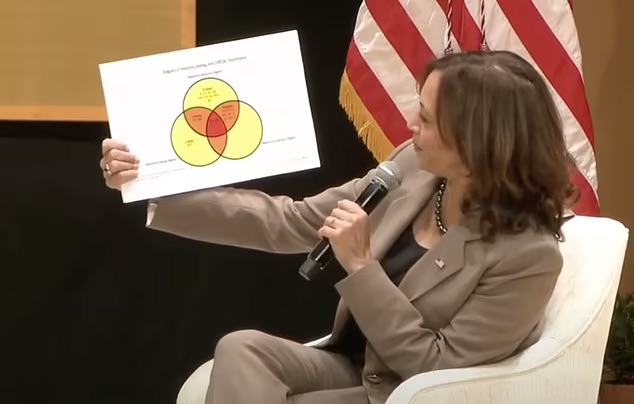
    Maybe that’s what showbiz (life) is all about: trusting yourself enough to take the next step without knowing where your foot will land. And, somehow, it all webs back together. Faith, courage, uncertainty, control. Maybe all I can really do is control what I can and trust myself to handle the rest as it comes. I love those Venn diagrams!!
    And while we’re on this side of town, I want to spend a little more time with the difference between bravery and courage. Bravery is often instinctive, an outward response that doesn’t require much deliberation. Courage, however, is something more enduring: a deliberate choice to act even when fear, uncertainty, or discomfort tells you not to.

    I feel like I have pretty good bravery when the circumstances warrant it, especially when I don’t have much time to think myself out of something. But I want to get deeper in my courage bag in several areas of my life. I want courage to become as instinctual as doubt is.

    I want to be able to sit with difficult, scary, unfamiliar situations and experience less anxiety, less negative self-talk, less self-doubt, less of that lack mindset that creeps in when I’m forced to sit with adversity rather than attack it head-on. Bravery feels almost bullish to me. There’s something about the lack of time, the adrenaline, the urgency that can make action feel easier. But nah, lemme see bitches be courageous when they’ve had time to sit with it! When they’ve thought about every possible way it could go wrong and still decide to act. Courage in the face of rejection. Skepticism. Uncertainty.

    And like with any skill, you only get better by trying. As a recovering perfectionist, it can be difficult for me to accept that growth and progress aren’t always synonymous with my likely unattainable standard of perfection. My instinct is to practice repetitively and privately until I reach some arbitrary, unpredictable point that I decide is “safe.” Only then do I feel comfortable being witnessed in my vulnerability, my courage, and the ambiguous, messy middle of figuring something out. 

    But the older I get, the more I realize how much I hold myself back by sequestering my progress in private. I’ve been treating exposure as something I need to earn rather than something that might actually help me grow. There is something about being witnessed before I feel ready (the beginning mustard seed of this blog btw), about sitting in that discomfort and allowing myself to be imperfect in front of others, that creates a kind of growth no one man can access alone. The irony is that in trying to protect the process, I may be depriving myself of the very tension that would meaningfully move it forward. 

    If I allowed myself to be seen trying while I’m unsure, to be seen before everything is polished and manicured, I think that’s where I would experience the most growth and, ultimately, the most liberation.

    And I know this sounds inherently surface-level, almost aesthetic-focused, but vulnerability goes far beyond the physical realm. I have no problem being seen without makeup, or stepping outside in some bum ahh, wack ahh fit. That kind of vulnerability barely registers anymore. But what happens when what’s exposed isn’t my face or my body, but my uncertainty? Do I feel that same comfort and confidence when I’m doing something I’ve never done before and someone is watching? Do I feel that same confidence when I’m unsure of myself, my desires, or my fears, but choose honesty anyway? When I have no polished version of myself to hide behind?

    I hate to interrupt the pensive cliff-hanger we’ve arrived at, but the answer is no. In those moments, I can feel my confidence evaporate. And for what?!

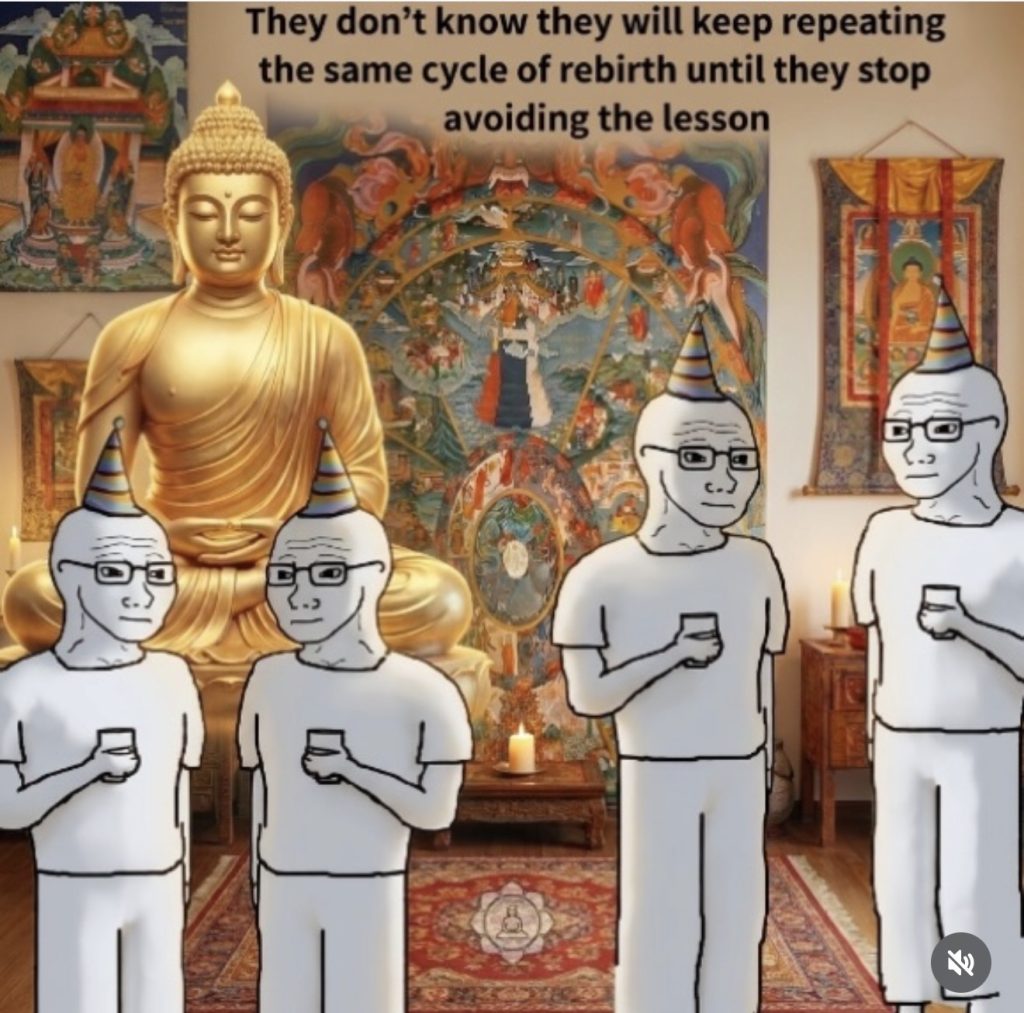
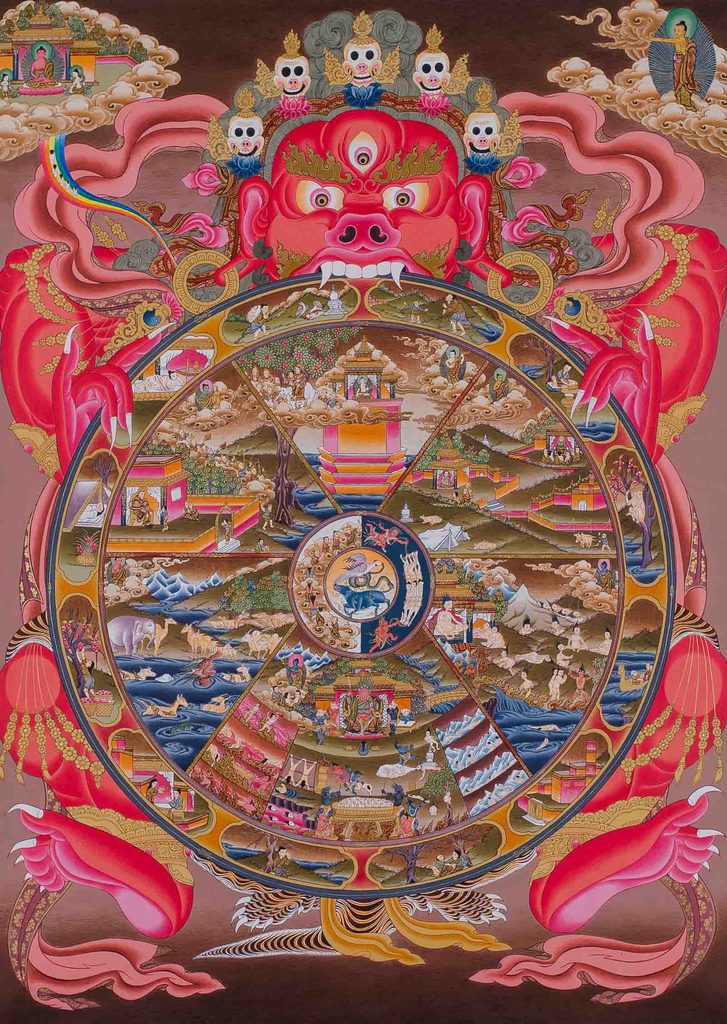
    There is far more to lose by clinging to control than there is to gain by choosing freedom. Kill the cop in your head! Freedom from anxiety, doubt, and fear is a lifelong practice, not a destination. Not many people “complete” that journey in a single lifetime. Maybe that’s the point. Maybe we wake up to the cycle of samsara only to realize that liberation was never about arriving somewhere, but about learning how to let go.
    What do I really gain from feeling in control if what I’m protecting is simply my comfort? At what point does the comfort become more costly than the discomfort I’m trying to avoid?

    I’m forcing myself to materialize that cost. To acknowledge that every time I retreat into what feels safe and familiar, I’m also making a choice about what I don’t get to experience. What I don’t get to learn. What I don’t get to discover. Staying comfortable has a real cost, and I’m beginning to understand that it may be the experiences and growth I keep postponing in exchange for the illusion of certainty.

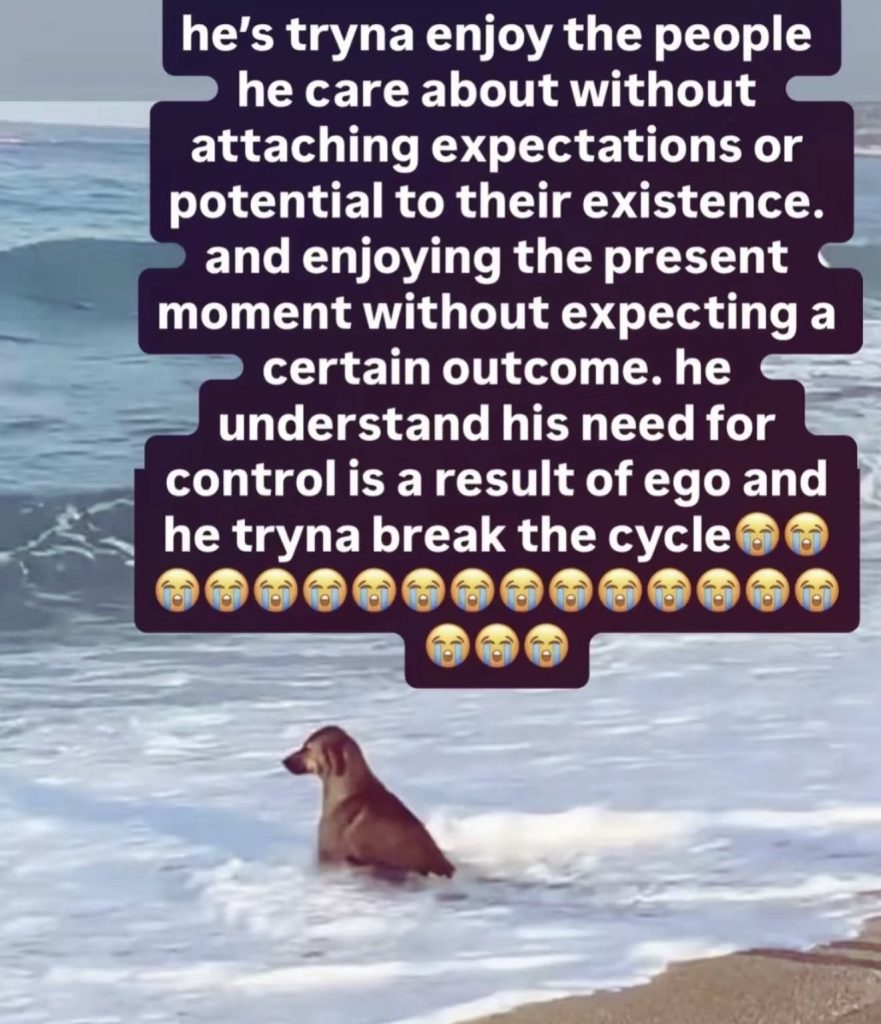
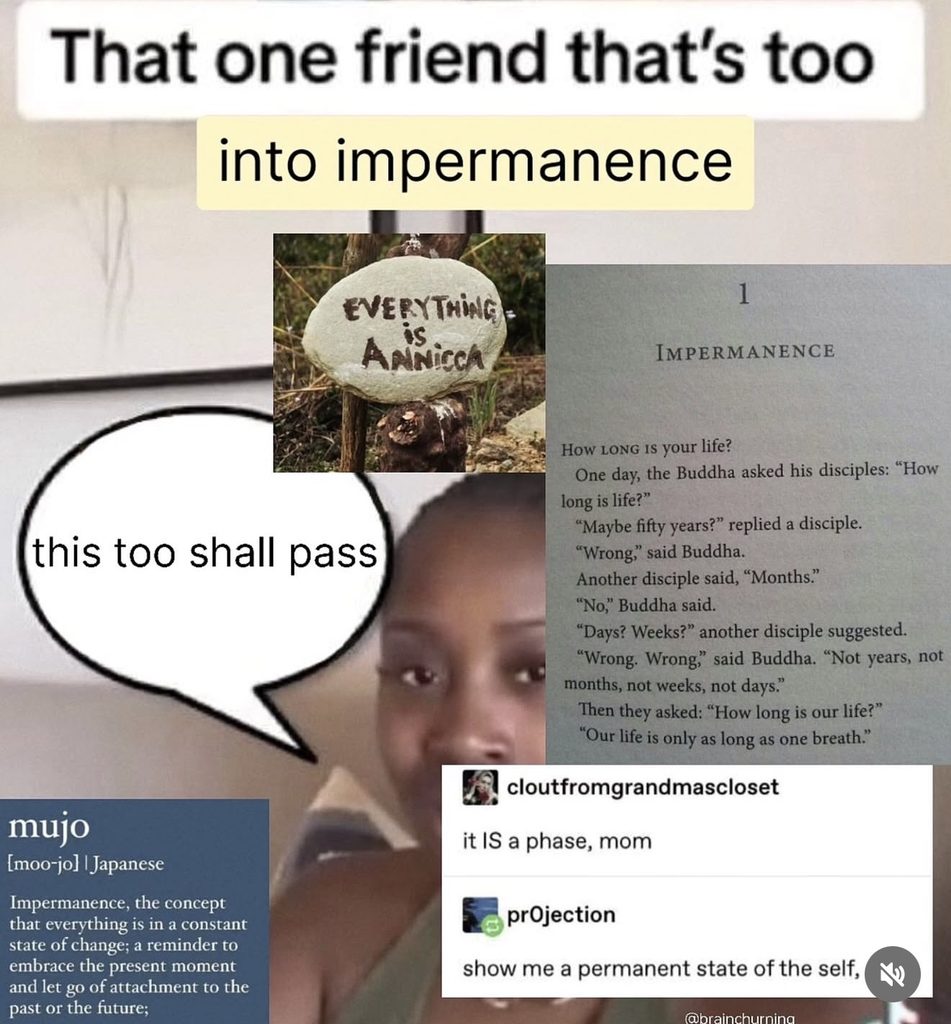
    And again mama, this is where we meet right back at the start: with the realization that I am sometimes guilty of holding onto attachments simply because of the comfort they provide in the middle of this stream of impermanence that is the human experience. I don’t think the work is to eliminate that desire for control so much as to understand it. Find the root of that desire. Sit with it. Examine its properties, its potency, its hold over you. Then decide whether or not you’re courageous enough to consciously detach.

    Detachment doesn’t mean you stop caring or start moving nonchalantly (please, for the love of god, chalant if you feel the need!). It means caring enough to recognize what is yours to carry and what isn’t. It means caring without clinging. It means giving your time and energy to the parts of the equation you can actually influence, and letting the rest fall where it may.

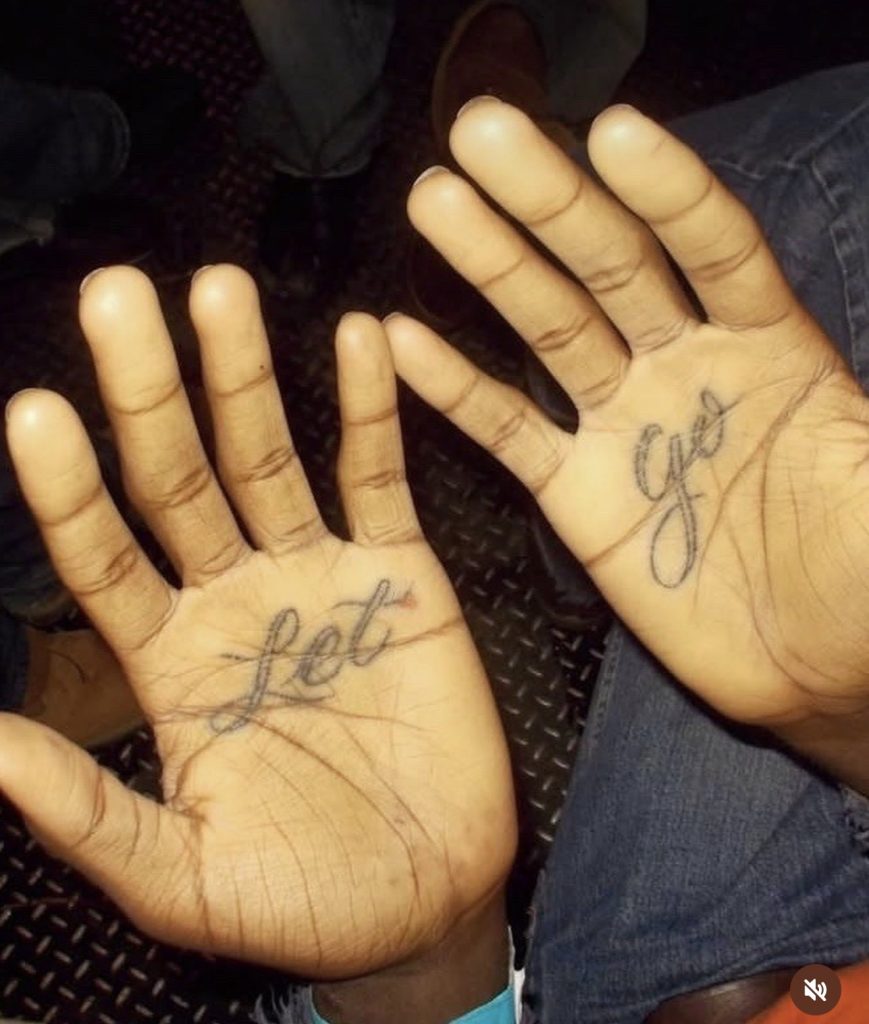
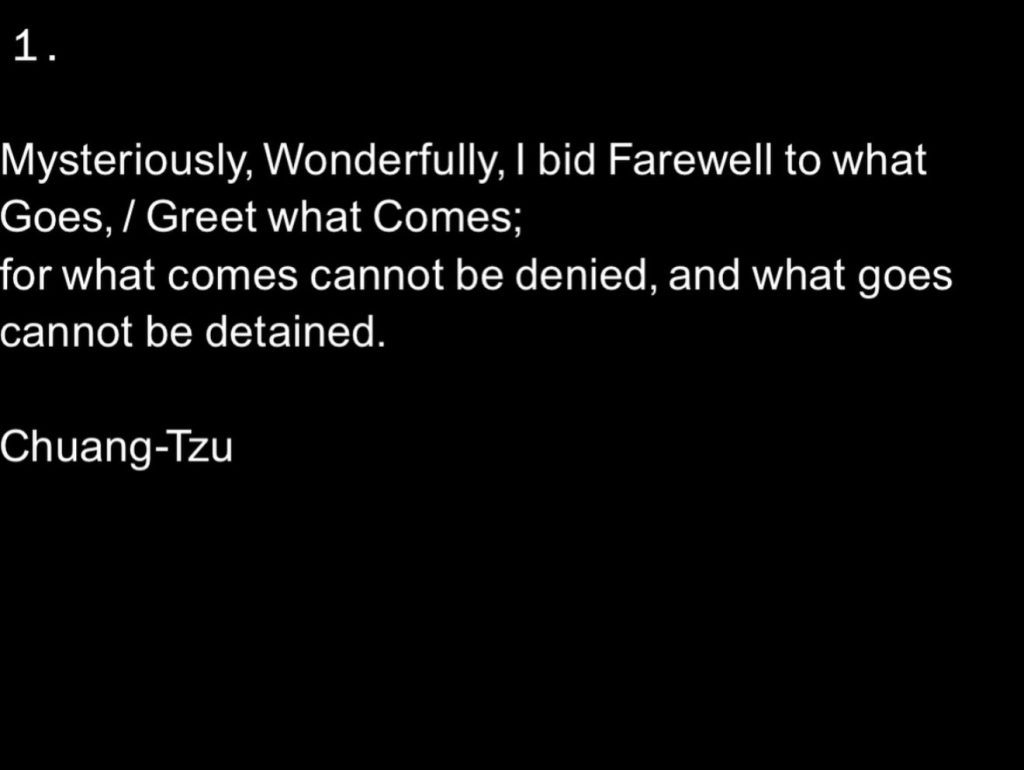
    Surrender to the stream of impermanence and let go with grace. For nothing is owned, only borrowed :).
    Screenshot
  • AI Can Never Replace Pen & Pixel Graphics: A Visual History of Southern Rap

    Payback II – Mia X + Thank You – Mia X

    ^^One of the best female rappers to ever do it btw.

    In a time of (sensible and rational) fears around AI growing louder, especially when it comes to art, and digital art in particular, I wanted to take a moment to shout out some of the best people to ever do it in the rap game: Pen & Pixel Graphics. 

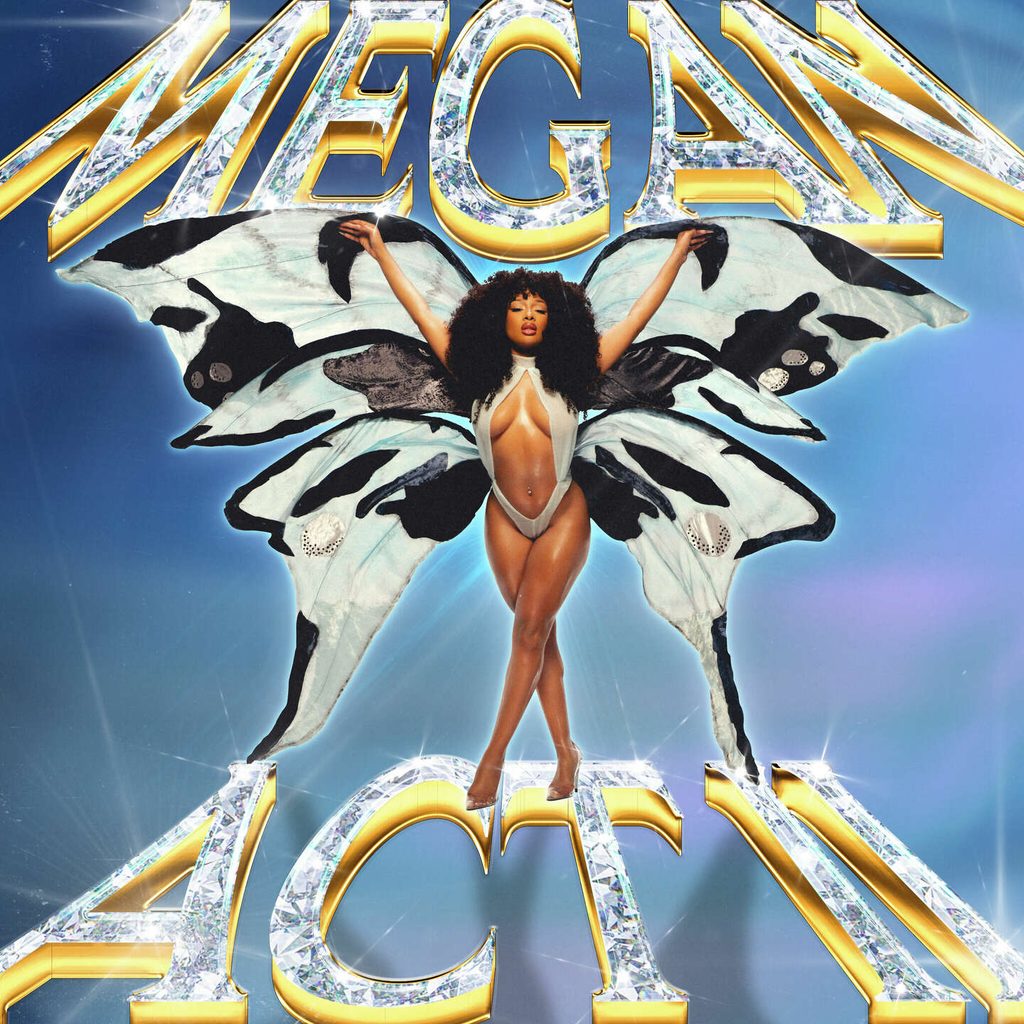
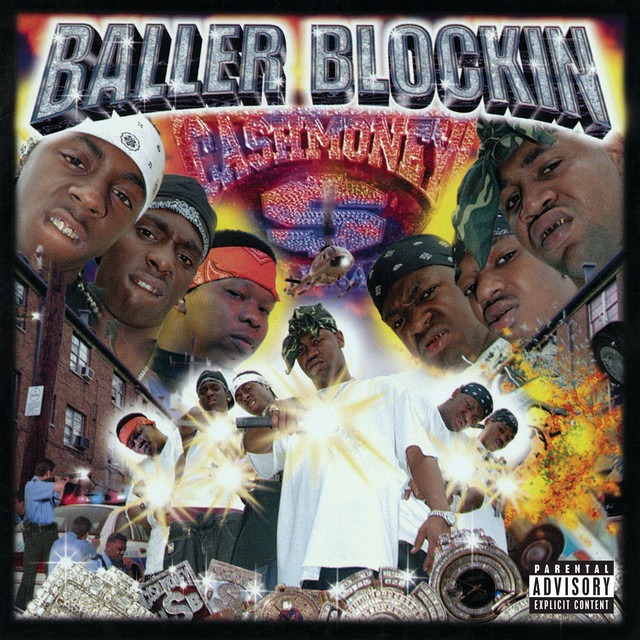
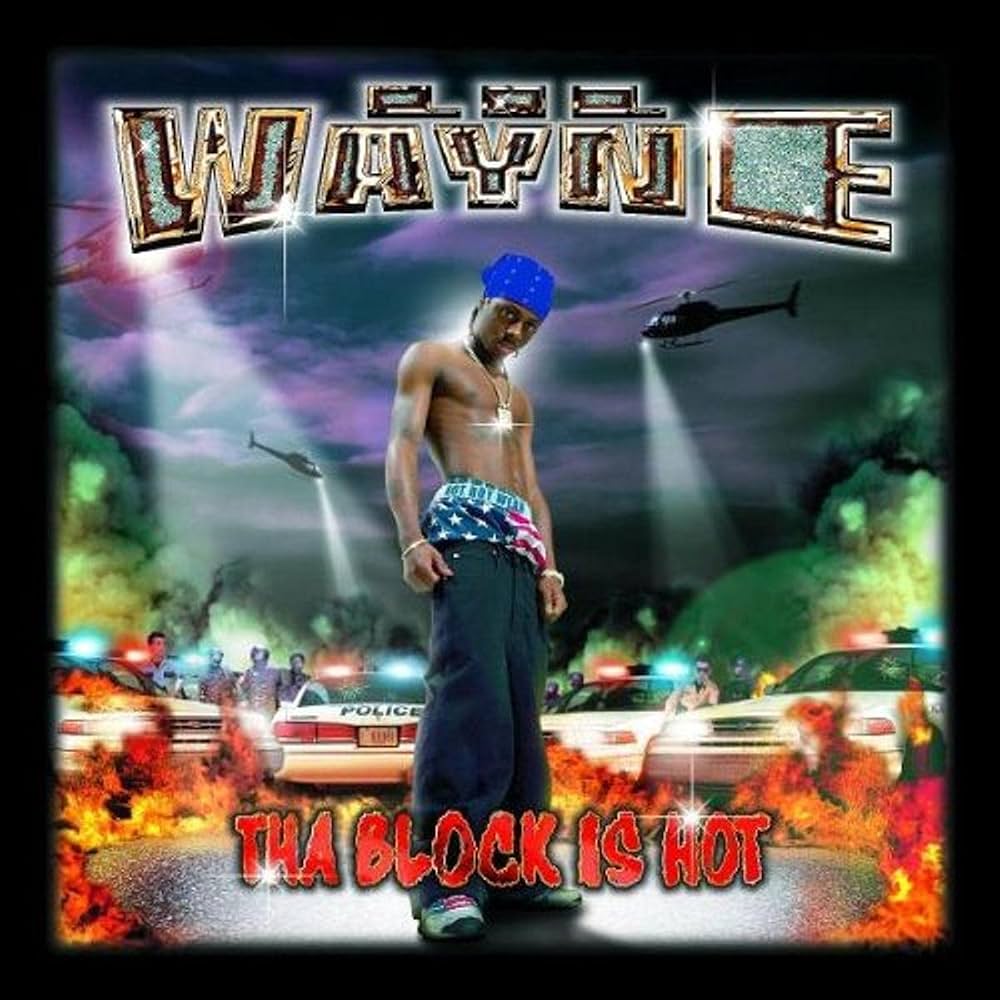
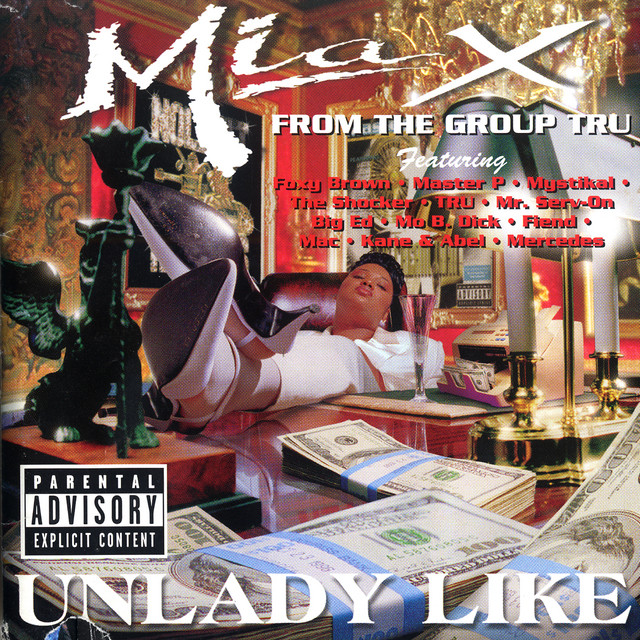
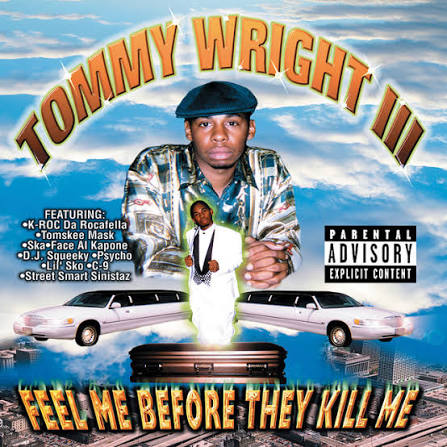
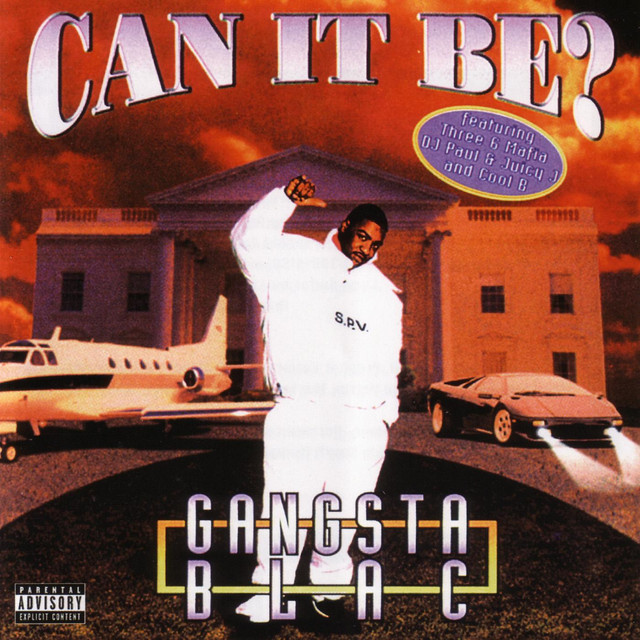
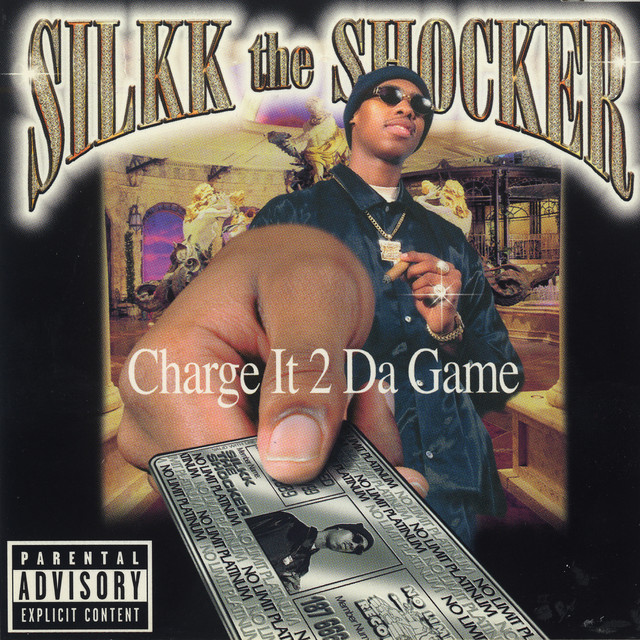
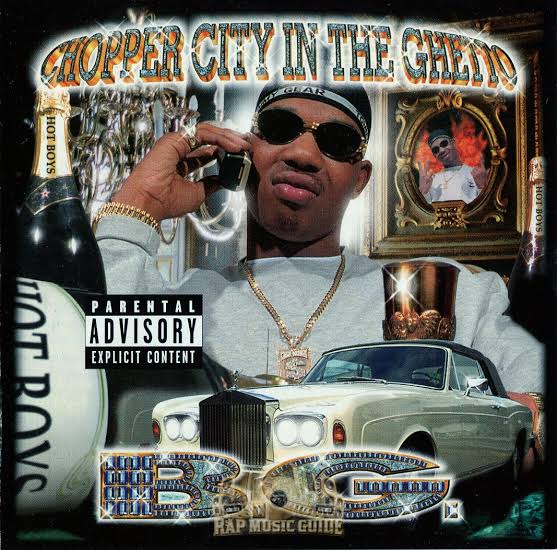
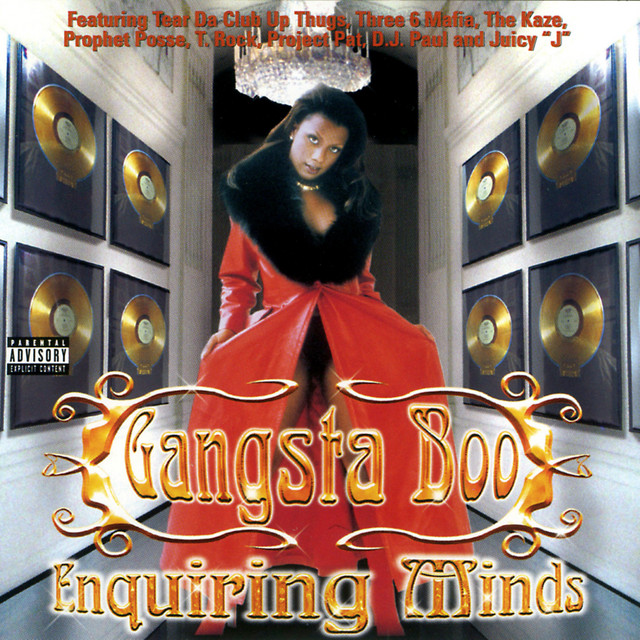
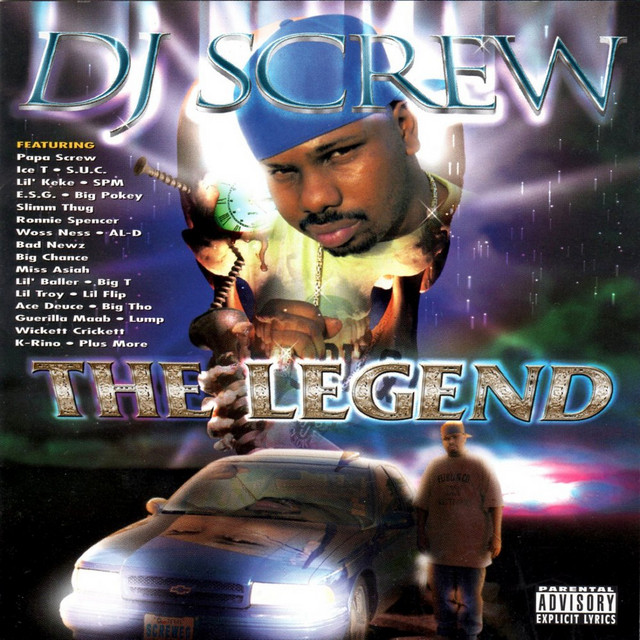
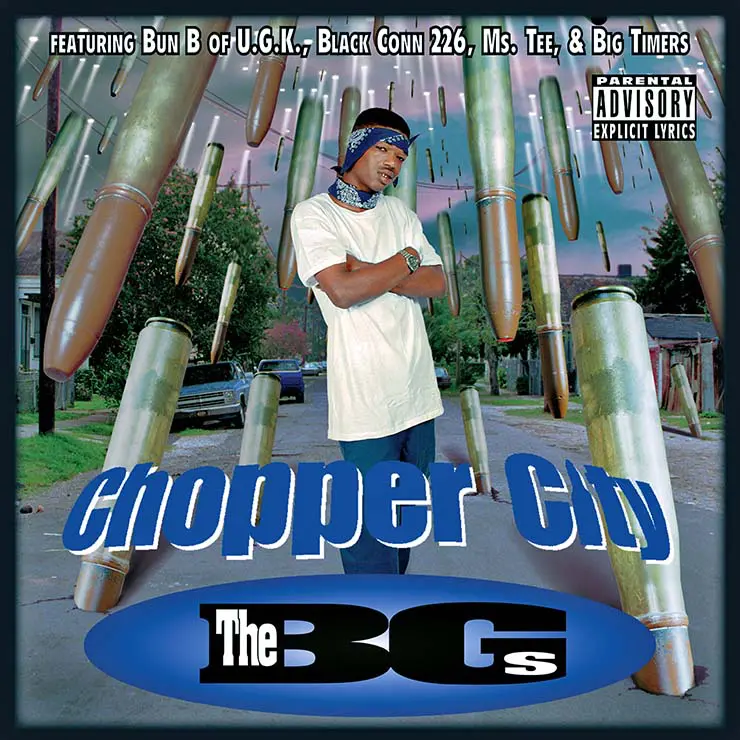
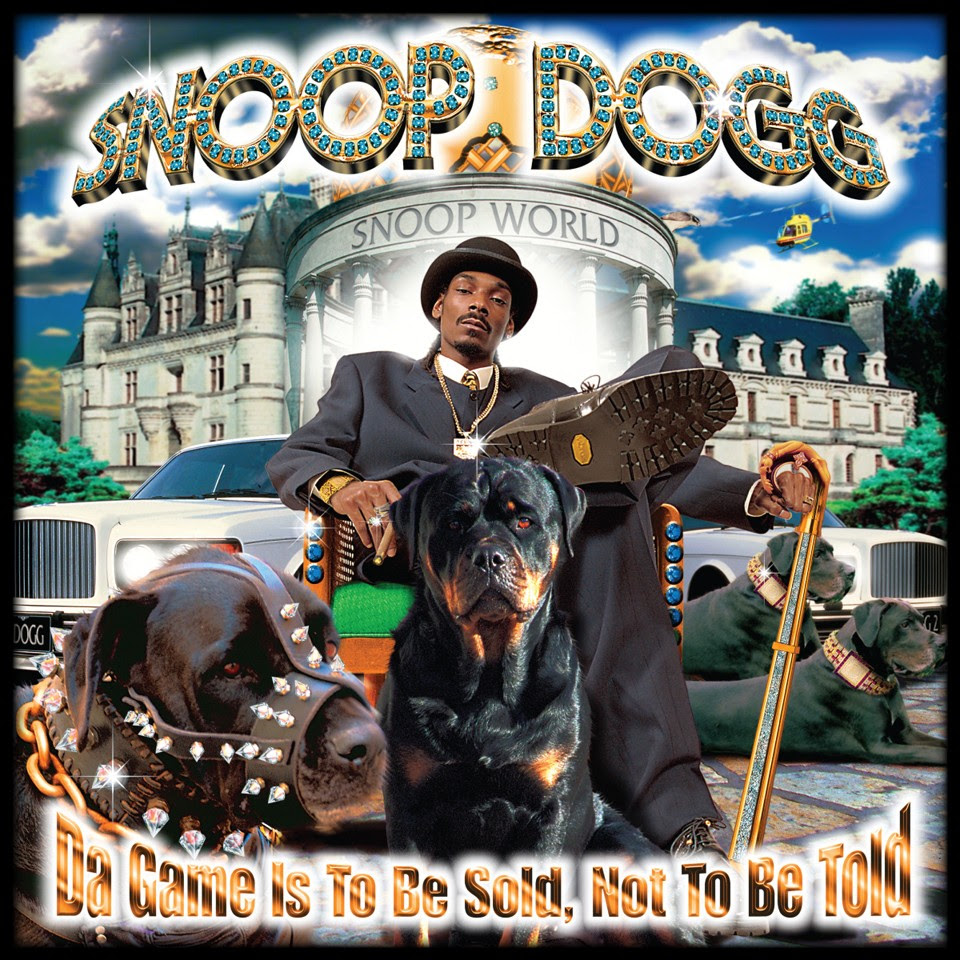
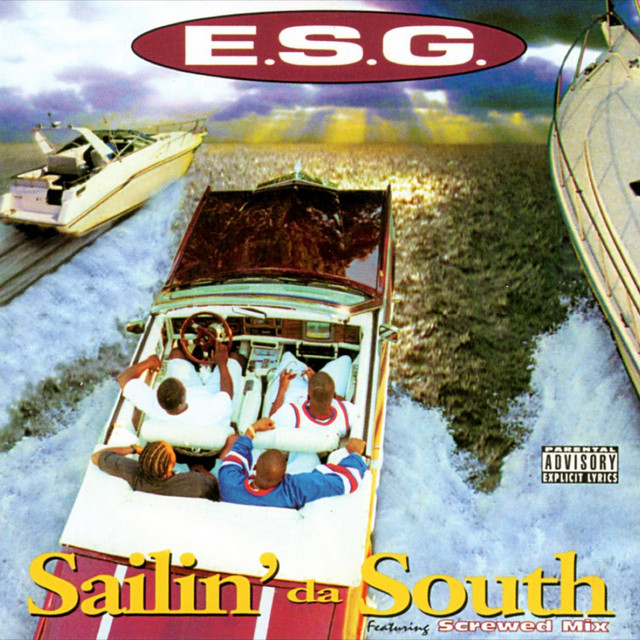
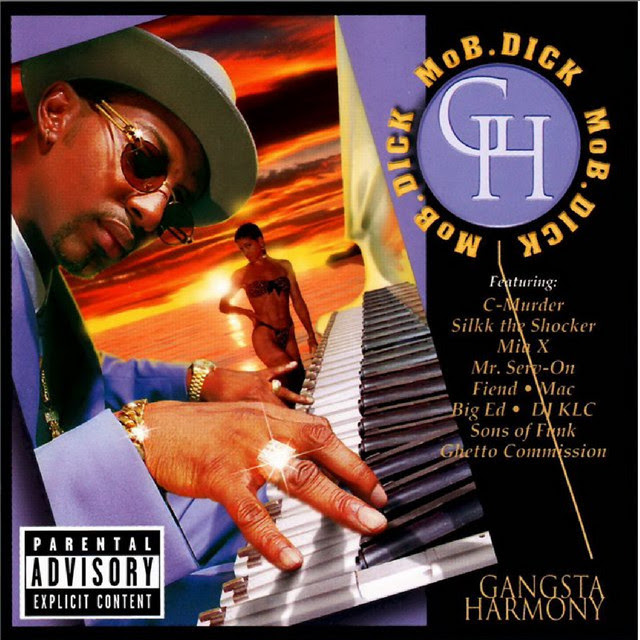
    You know the aesthetic, even if you don’t know the name. Maximalist compositions. Hyper-realistic collages. Grandiose, blinged-out, almost absurd 3D typography. Pen & Pixel had a way of turning visual excess into an art form. They made the impossible possible. Beyond album covers, they pushed digital art into places it had never been before, inspiring generations of artists and ideas that cannot be distilled into a prompt or replicated by a machine. 

    And that’s the thing AI can never recreate: imagination. 

    Pen & Pixel was a Houston-based graphic design firm started by two brothers, Shawn Brauch (art director) and Aaron Brauch (business + systems guy). They started the company from the dining room of their apartment, but Shawn’s background as a classically trained artist gave them something central to their process: a strong foundation in traditional hand skills and the ability to translate ideas onto paper before they ever touched a computer.

    Their formula was deceptively simple. They would sit down with a client, listen to the music, and immediately start throwing down sketches. Those preliminary sketches became the foundation for everything that followed. They informed the photography, the compositions, and eventually the digital work.

    Pen first, pixel second. 

    The brothers were early adopters of emerging technologies like Photoshop and SGI workstations (advanced 3D graphics and visualization software), eventually becoming beta testers for Adobe. They worked directly with the company through glitches and bugs, showing Adobe how they were using the software to create their work. (I just wanna pause here and wake up how legit you gotta be to use the cutting-edge technology so hard that the creator of said technology is on your line asking how you’re doing it?).

    Some of Pen & Pixel’s most career-defining clients were Cash Money Records and No Limit Records. The brothers became in-house designers for both labels, helping shape their visual identities and creating the now-iconic logos that became synonymous with Southern Hip-Hop.

    From there, their influence spread far beyond the South. As they began designing covers for artists all over the country, the Pen & Pixel aesthetic quickly became a visual language of its own. Their maximalist style inspired thousands of album covers over the decades that followed. With such a distinct visual identity, even a novice Hip-Hop fan can spot a Pen & Pixel (original or inspired) within seconds. 

    At the height of their success, the brothers had expanded well beyond music, working with household names like Ferrari, HBO, and the Houston Rockets. Pen & Pixel had effectively become a “special effects” house: the place to go when you wanted Photoshop pushed to its absolute limits, whether that meant retouching, compositing, or creating something that couldn’t exist elsewhere. 

    Pen & Pixel’s creative direction was integral to their clients’ visual success, especially during a time when major record labels weren’t paying much attention to what was happening down South. The majors had the money, and the money came with access to art direction. Smaller and underground artists? They had to hustle.

    By working in tandem with artists’ lived experiences and existing visual identities, the brothers helped cement a visual language built around ambition, excess, and possibility, one that represents the limitless philosophy of the American Dream through the lens of Hip-Hop. 

    One component that made their style so distinct was their refusal to rely on stock images to create the digital worlds they conceived. Rather, their team orchestrated custom photoshoots, photographing items like bullets, luxury cars, women, and jewelry individually and from unusual angles to build their own archive of assets. They weren’t just pulling images together; they were creating the raw materials for an entire visual universe. 

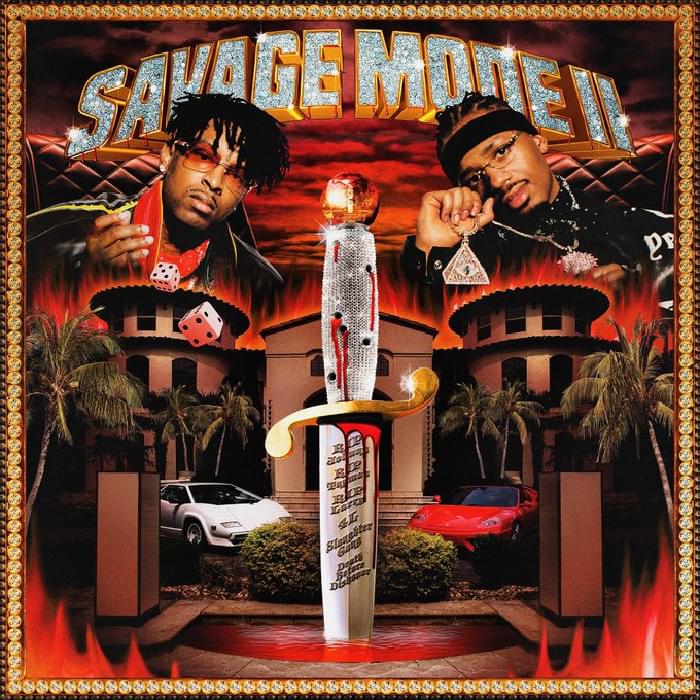
    But perhaps nothing became more synonymous with Pen & Pixel than their 3D bling typography. Diamond-encrusted, platinum- and gold-textured fonts became a defining element of their aesthetic. A style that still lives on in album cover art (and much more, tbh) today. 

    Over the course of their 11-year (legendary) run, Pen & Pixel created nearly 20,000 album covers, helping define the visual identity of Southern Hip-Hop before their influence eventually spread across the genre as a whole. Their maximalist, hyper-realistic approach to Photoshop and digital collage became one of the defining aesthetics of ’90s and 2000s Hip-Hop.

    Sadly, in 2003, Pen & Pixel closed their doors due to the rise of Napster (a music file-sharing service) and (lowkey surprisingly) the attacks of September 11. Artists became reluctant to fly to Houston to review artwork for an audience that may not even physically see it.

     Not long after, the aesthetic itself began to fall out of favor. The excess of the ‘90s gave way to the minimalism of the mid-2000s, with the rise of the iPod era of digital music changing not only how we listened to music, but how we visualized it. Nearly 20 years after closing their doors, Pen & Pixel came out of retirement to design the iconic 2020 album cover for 21 Savage and Metro Boomin’s Savage Mode II.

    Lest us not overlook the unwavering confidence and trust the brothers had in themselves, their clients, and their vision. Confidence that gave them the freedom to ignore the disapproval of critics and peers alike. They ignored the traditional rules of composition and embraced an excessively comical use of digital effects. Critics have since come around to recontextualize the style as a deliberate artistic choice, but that validation came after Pen & Pixel had already changed the landscape of album cover art. At the time, people largely understood their work through its association with gangster rap rather than recognizing the artistry, innovation, and pioneering digital skills behind it. 

    It’s at this exact realization that we can revisit the intellectual limits of AI. Experimentation, confidence, and fearless audacity (human breed, too) all contributed to the company’s success, eventually turning their style into a blueprint that would influence decades of visual culture beyond music, permeating spaces like fashion and archival art. 

    You can teach a computer a skill. You can code a computer to mimic a style. But you cannot imitate human-generated swag!!

    Art becomes multidimensional when it converges with human experience. The technique can be replicated. The conditions that produced the art cannot. 

    I’ve gathered some of my favorite Pen & Pixel album covers for you to peruse at your leisure, but consider this merely an appetizer. The selection I’ve chosen could never do justice to the full breadth of their boundless creativity; therefore, I highly recommend exploring the complete archive of their work through: https://southernrapalbums.com/

  • Art Locks Language Into Physical Reality

    Pray 4 My Friends (Steven Julien Remix) – dreamcastmore, Shungu, Steven Julien + Alamode – Art Blakey & The Jazz Messengers

    I constantly think of the Nietzsche quote, “Is language the full and adequate expression of all realities?” At minimum, once a week. (And straight OFF THE RIP * 2019 DaBaby reference, the answer is a resounding HELL NO!! But with all things regarding this blog, there’s some nuance to that no that I wish to explore in this space.)

    I have always found a profound degree of satirical irony in the fact that, even though language is one of the most limited mediums of communication, it’s championed by society the most. Language is perceived as the most legitimate form of communication in Western culture. It’s highkey part of the reason I started this blog. The symbiotic relationship between linguistic precision and our ability to express our thoughts and feelings fully, adequately, and clearly through words constantly fuels my curiosity about the world. And yet, the fact still remains: you could know all of the words in the universe, in as many languages as satisfy your desire, but because words are not actuality (a description of a mountain isn’t a mountain), they will oftentimes fall short of interpreting or being an absolutely accurate conduit for our feelings and emotions.

    I think of relationships and phenomena in which language, as a form of communication, is insufficient. I liken the dynamic to loving an animal. You and that animal have never had a conversation in a common language, but still, there is a bond, a love that is reciprocated without the need to speak. Rather, acts of affection, care, and consistency build that relationship. Or take the saying, “a picture is worth a thousand words.” The glaring example is art: how different mediums help convey different emotions and elicit different feelings. The relationship between the artist and the medium can incontestably carry more clarity than words. Color, texture, tone, and composition can often communicate human feelings more succinctly and powerfully than words. Yet, despite these indisputable truths, society still regards words as the most capable and absolute means of communication. What could our world look like if we invested as much money and social capital into art as we do into language?

    It’s almost as if we choose to suffer for our inherent, rigid allegiance to language. That relationship will always fascinate me, especially because it’s one I’m so inextricably tied to. This is a blog, for Christ’s sake! I think we will always choose language because of how mercilessly we crave the ease it brings to connection and understanding. Literature and poetry use language as a creative medium, while the vast majority of human communication is functional and structural. We all experience and interact with art and nature on a daily basis, yet we still choose to communicate mainly within the constraints of language.

    Although I’ve only painted in rather broad strokes up until this point, this isn’t my dog whistle for linguistic anarchists or language-importance deniers. However, I hope we can uncontestably recognize that society invests far more of its language in practical survival, science, law, and daily coordination than in pure art. I can fathom the societal need to prioritize survival, predictability, and scalable cooperation over raw emotional expression. Society cannot run on open-ended expression (no matter how eutopic it sounds to me). The function of language in modern society is to serve as a precise, predictable tool for managing collective behavior. Society invests so much into language to eliminate ambiguity and prevent chaos because the primary goal of language is to create an effective, employable workforce, not an emotionally competent or expressive society… Which is such a damn shame, because I know so many grown adults who would benefit from being prompted to use their brains more artistically on a daily basis. 

    But to reimagine what we know to be true would be to invest just as much into art as we do in language. It would mean shifting the perspective of daily communication from utility-driven to one that recognizes its profound aesthetic, emotional, and philosophical value. I’ve soft-launched this idea in some unwelcoming public circles, and their contested opinions echo the fear of losing the “advancement” we, as a society, have made if we broaden our focus. And to that, I would say that art has an unmatched ability to express complex human experiences which, if expressed properly (to a high degree of accuracy and proficiency), only serve to enhance language, not deplete it.

    Investing in that infrastructure could look like investing in creative literacy within schools, teaching children (who grow into the composition of society’s adults…) to express their inner worlds with as much fluidity as they write essays. It could mean having public funding to protect endangered languages and dialects, viewing language as the irreplaceable, living architect of human thought that it is. It could mean heightening linguistic architecture in public parks, squares, transit, etc., treating these spaces with as much civic pride as we do art museums.

    Not only do I believe society would see an undeniable collective ROI, but history has proven my hunch correct. In many West African empires, such as Mali, Songhai, and Ghana, art and language were never viewed as separate entities. Society invested in material art with the same functional, legal, and structural weight that it gave to the spoken word. Textile communication within these communities was of the utmost importance. Empires poured immense economic resources into training master weavers because textiles functioned exactly like state documents. Each color, thread count, and repeating pattern communicated a proverb, historical event, or legal status.

    During the Heian period in Japan (794–1185), poetry entirely replaced standard social speech among the aristocracy of the Japanese imperial court. One’s social standing, hiring capability, and political advancement were directly correlated with their penmanship, choice of stationery, and ability to improvise a nuanced poem in response to a colleague or rival. In their culture, communicating bluntly was seen as vulgar and a sign of poor character.

    In Native American cultures, petroglyphs (carvings) and pictographs (paintings), although lacking a structured grammar, convey sounds. The carved images worked alongside spoken oral histories. Notably, there is a close link between rock carvings and traditional Indian Sign Language, which, together with national and regional sign language dialects, gave rise to American Sign Language. Indian Sign Language used both physical gestures and shared visual signs to bridge different spoken tribal languages. Many tribes viewed these carvings as a direct form of communication. To illustrate, the Hopi word tutuveni means “rock carving” or “painting,” and the same word is used today to refer to books and newspapers.

    I’m not suggesting that lawmakers start using hand-drawn pictures to interpret the law rather than language (even though my argument may sound that outlandish to some). Rather, I’m proposing that we infuse artistic expression and emphasis back into language, for it benefits society as a whole. There would be a public benefit in investing in the nuance of artistic language. To have the importance of utility rival poetic form isn’t some interpretive, romantic, idyllic goal. It’s, in fact, the way previous societies functioned (likely more successfully than we are right now, might I add) for thousands of years. Sometimes, the most radical form of innovation is remembering that humanity has already spent millennia figuring out how to live. All we gotta do is wake it (tf) up.

    Screenshot

  • Boredommaxxing To Fight Instant Gratification Because It’s That Damn iPad!!

    Get Dressed – Jeff Parker + Down 2 Tha Last Roach – Eazy-E

    “Reducing how much of my life is on my phone…because I love what the digital world can do, I just don’t like the way I’m using it, and that’s on me.” – Leonie

    There’s an ominously cyclical feeling about swaths of my generation wanting to move away from living so immersed in the digital age. I can vividly recollect the beloved times before smart devices, but, to a certain degree, my entire life has always been digitally connected. And while the convenience and novelty of that fact are #awesome, in some measure, I do yearn for a different reality at times. Being on the iPad (phone, computer, TV, big-ass/bright-ass screens) feels so good (Chuck Mangione reference) in the moment, but being off the iPad feels so fulfilling, and the solution lies within the tension between.

    A number of my friends have started to disengage from their smart devices and, more specifically, from social media (aka Instagram) altogether. I have several friends who have permanently deleted their Instagram, a few who hit the deactivation tease for periods of time, and even more who have set physical limitations on their social media or phone use. Either by setting time limits on apps or moving away from apps altogether toward more analog ways of documenting, everyone in my echo chamber can admit: it’s that damn iPad!

    The glaring sardonic irony is that society scrutinizes children and adolescent screen time but, when it’s time to look at the man in the mirror and check an adult’s screen time, it’s quiet, ain’t no backtalk!! We’ve been socialized to see it as normal to not only start and end the day on a screen, but to fill every available second you barely possess with an activity on your smart device. 

    There’s also something distinctly unsavory in experiencing the commodification of my social media feed. Somewhere along the line, I stopped feeling good after spending time on my phone (temptation tipped into terror), and I would never know where that line was, well, until I had crossed it. There was a time when I left these platforms carrying inspiration, feeling just a little lighter than when I had arrived. But somewhere along the way, that feeling disappeared. In its place was a grimy film that slowly settled over my perception of myself and the world around me.

    I’m not here to demonize iPad time (mind you, my phone unbricks Insta @ 9 PM every night, and best believe I’m clocked in when she does) or even try to persuade the masses away from smart devices (a different battle for a different day ;)), but rather scrutinize the boundaries we set (or lack thereof) around them. It’s undeniably not my fault that I gradually and unwillingly amassed a mental addiction to scrolling mindlessly on my phone. Nonetheless, it is my responsibility (they love to hate that one) to rewire my brain so I am not so reliant on the immeasurable amount of instant gratification it gives me.

    The biggest consequence of living in such a digitally convenient age is how the mental expectation of convenience and instant gratification permeates all areas of one’s thinking. To a certain degree, everyone is chronically impatient because of it. That restlessness or intolerance, even for being patient, being unstimulated… being #BOREDASF #DOINGNOTHINGASF (if you can even remember what true, no-phone, no-TV, no-music, I’m-grounded-asf boredom feels like), lies at the root of a lot of negative social outcomes that we face today. Living in a state of constant stimulation isn’t good for the nervous system, the soul, or your creativity.

    Presently, you have to practically bend over backward to be bored. Whenever I told my mom I was bored as a child, she would slyly respond, “Only boring people get bored,” and that sentiment has aged so timelessly. Whenever I feel “bored,” what I’m actually feeling is a lapse in unending stimulation. Boredom begets breathing room. Space between your thoughts and reactions. Yielding an expansion of time where you can observe your surroundings, observe how you feel. I’ve been shifting from seeing boredom as a state that needs to be changed immediately to surrendering to the reality that I’m just spending time unstimulated. It’s no secret that some of your best ideas, solutions, and realizations come when your mind isn’t swarming with constant stimuli.

    Precisely at this intersection is where the magnitude of Tapas (self-discipline) arises. The challenge for me has been finding boundaries that are both sustainable and permissive enough to let me use my phone without letting it use me. Gaining cognizance and intention around when I reach for my iPad, what I reach for it to do, and how long I stay. Intentionally padding my day with pockets of “boredom,” where observation becomes sufficient, and presence isn’t tethered to productivity or a destination. More than anything, it’s about abandoning the belief that every problem demands an extreme solution. The answer, more often than not, waits for us in the grey. We are called to embrace both the discomfort and the beauty of that ambiguous place because the cost of unfettered freedom is learning how to live without absolutes.

    P.S. S/o to Leonie for letting me use her thoughts as a launching pad (and yes, she did consent to me sharing her name w/ the group, don’t play). Your curiosity, encouragement, and light reside within me. Love and miss you <3.


  • Had To Log Off Because Opportunity and Duty Are Sometimes Born Together

    Successful (feat. Trey Songz & Lil Wayne) + What About Me – The Exceptional Three

    CHATTTTTTT!! It has been entirely too long (but also somehow just long enough) since we last spoke. In vowing to honor complete transparency in this space, I have to be forthright and convey that my absence was due to an emotionally dense couple of weeks. My internal landscape has felt like the climax scene in Everything, Everywhere All at Once. As far as I am concerned, the most sick and twisted part of adulthood is that there is rarely, if ever, a pause for all the other shit you have to keep running within your life when you are stretched to your max emotional capacity. Sometimes you gotta throw some shit (responsibilities/commitments) off the boat to stay afloat (and there is strength in knowing when to do so). I’ve gone back to therapy for the first time in a little over a year, and we’ve graduated from the more moderate “how are you feeling today?” to “so what was that trauma like?” Anyone who has walked that path knows the emotional baggage that can come with it. At the same time, I was experiencing the birth of opportunity and duty as they arrived at my doorstep, bundled together in a package that felt both overwhelming and unfamiliar. Having those two realities exist simultaneously prompted me to log dafuq off for a lil bit :).

    For the past few weeks, I had been incessantly pestering myself in the back of my mind, sprinkling seeds of guilt and even failure every time I thought about my decision to put this “weekly” (I purposefully use that term loosely too, like girl why are you beating yourself up) commitment on the back burner. While I was lamenting the culpability of my lapse in posting, one of my favorite people in the world gently brushed the rubble off my disjumbled thoughts, and there, nestled beneath the debris of my guilt/shame, was precisely the idea to expand on in this entry.

    GIRL STOP BEING DISAPPOINTED AND GUILT-RIDDEN WHEN YOU CAN’T DO EVERYTHING IN THE WORLD ALL 365 DAYS OF THE YEAR!!!

    I consistently and successfully juggle the daily responsibilities of my life across all areas, 95% of the time. But every once in a while (as expected with every human being), life humbly forces me to admit that I cannot do it all. I am constantly working on releasing the shame and guilt I can carry whenever I am forced to greet that realization. I think it’s beneficial, mandatory even, to take pride in yourself and one’s ability to rise to expectations regardless of personal feelings or external circumstances. In my judgment, it is the quickest way to build irrevocable trust and confidence within oneself. Taking pride in keeping your word to yourself, following through on what you committed to, has an importance that is second to none for me. But, as with all things (waking up the blanket theme that wiggles its way into every thought-driven entry), the answer lies within moderation, AKA the grey. 

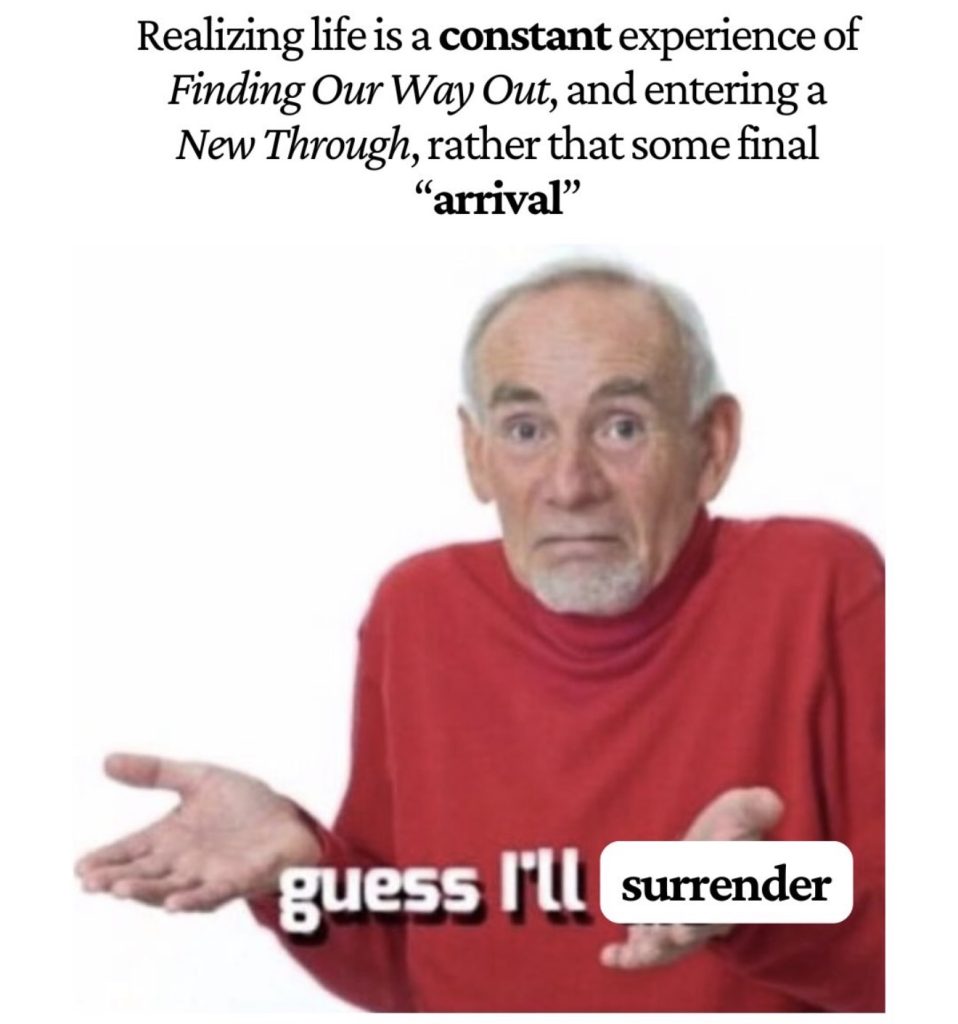
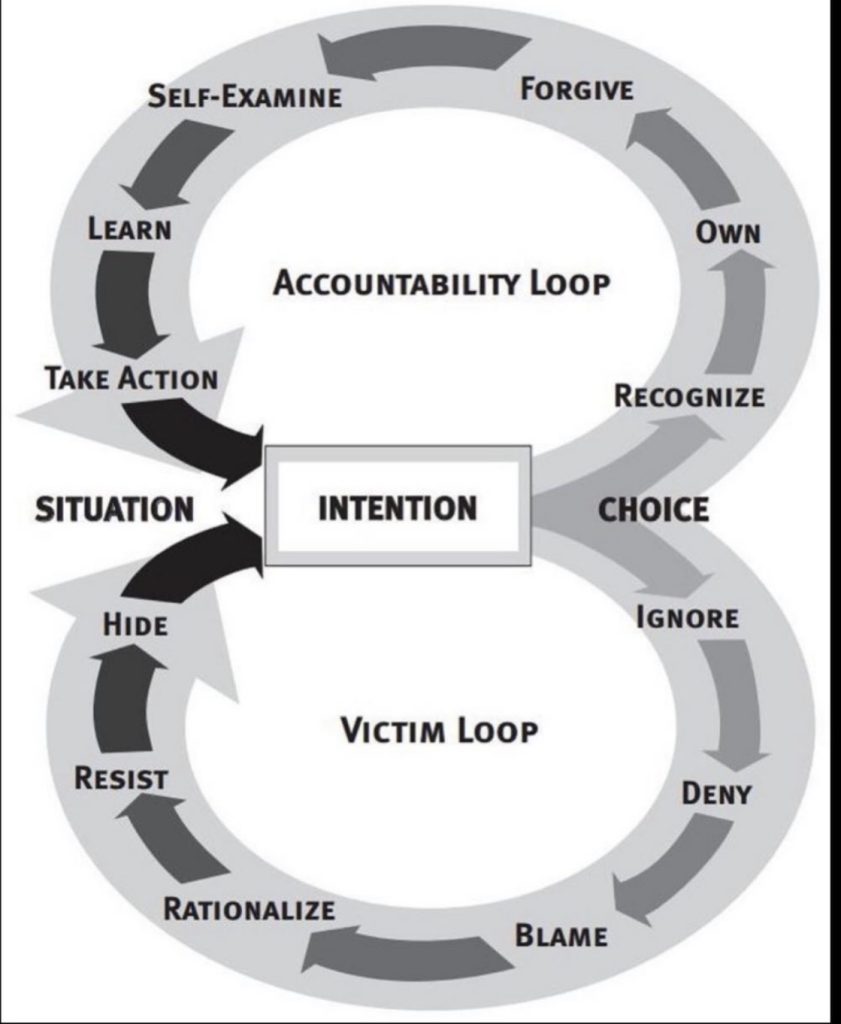
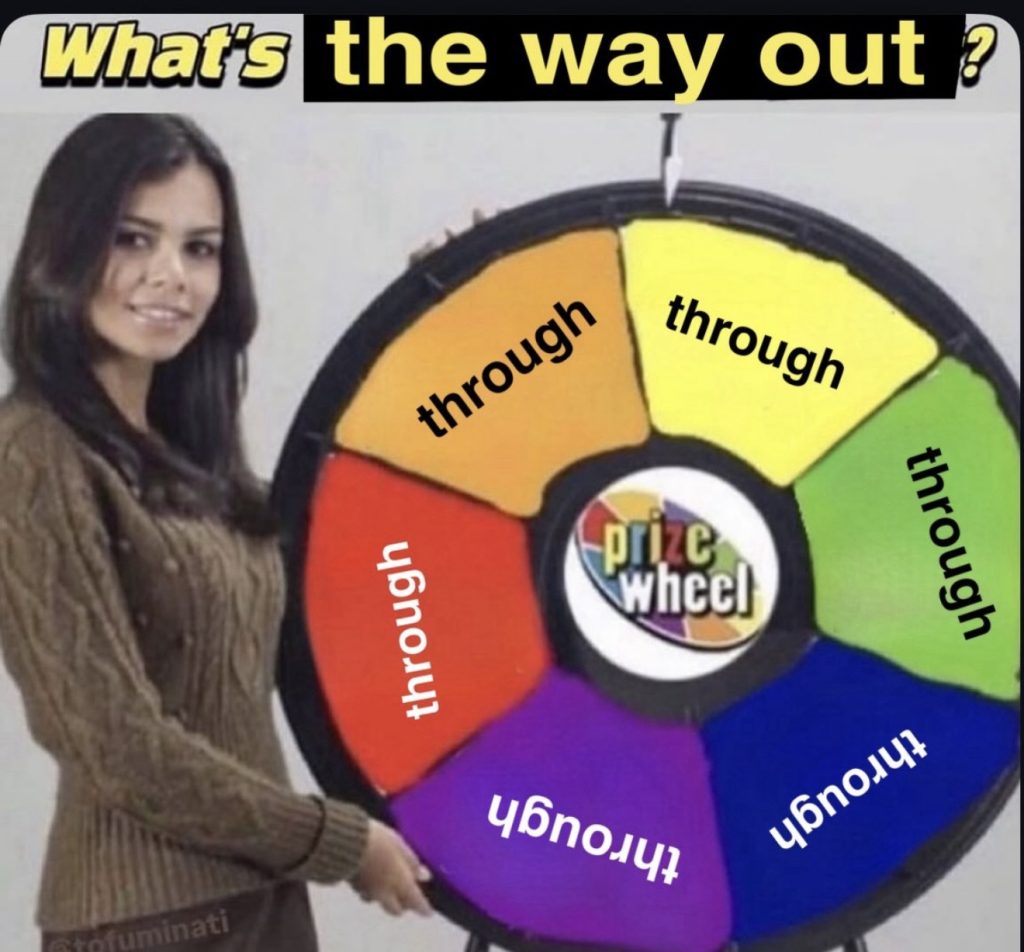
    Admittedly, I was naively (yet earnestly) trying to become the first person in human history to resolve another way out than through. Furthermore, when I was so courteously reminded of the only option (it’s through, in case you needed a refresher!!) I needed time to fully let go, surrender, and observe. ← And that shit is fucking hard, btw, don’t listen to any soul who says otherwise! Having the capacity to be fully emotionally, physically, mentally, and spiritually present in your life through times of grief, uncertainty, and discomfort is no small feat. If only avoidance yielded a result more substantial than highlighting the entrance to where you need to go. Avoidance feels good until the comfort of familiarity wears off, and the lesson you’ve been trying to outrun begins meeting you at every corner of your daily experience. Nonetheless, choosing to remain open to the experience, no matter how uncomfortable it may feel, has been one of the most integral and enlightening ways for me to understand myself as I am and recognize the places where I can continue growing into my highest self.

    Screenshot

    Surrender is hard, but so is holding on. Uncertainty is hard, but so is conviction. To know grief is to know love. Everything can change, everything will change, everything has changed. Humans are not machines; we are not meant to perform at peak performance constantly. You and your experience won’t be the first to disprove these eternal truths, and all you cause yourself is unneeded suffering when you attempt to do so. There is strength in understanding your limits, and even more wisdom in giving yourself permission to pause before you reach them.

    Screenshot

    Sometimes I worry that my writing sounds preachy when in reality, I am mainly writing to myself. I am proud of how far I’ve come, but that doesn’t mean I have somehow transcended the very human experience of saying the wrong thing, fucking up, or doing something I regret. I simply don’t write down every instance of it. What I do try to anchor myself in is what I know to be true, because I think learning from our mistakes requires having something steady at the center of us to return to. 

    There’s also something beautifully mystifying about the disconnect between language and feeling. I can read my own words back and think, damn, this sounds so much more put together than I feel. And honestly, y’all, that’s the point I am trying to make. I didn’t disappear from my passion project for a couple of weeks because I had some profound reason or because I stopped caring. I needed a fucking break. That was the reality behind the scenes. And I am hereby releasing myself from the shame and guilt I prescribed to myself for taking it. I don’t need to be the architect of my own suffering. The journey will provide enough of that on its own. 

    All that being said, I’m glad I didn’t spare another second before I reunited with my keyboard and headphones, for there is no greater satisfaction than letting the thoughts that have been brimming beneath the surface of my mind spill freely onto the page and find form through language. Feeling a lot more grounded, optimistic, and present within my life, which will inevitably translate into this project. 

    And as a final reminder:

    Above all else, take the time to fucking feel!! The joy, the grief, the discomfort, the wonder. To experience the entire spectrum of human emotions is a privilege, and what a waste of flesh it would be to cherry-pick which part of being human we allow ourselves to experience.

    Screenshot

  • If The World Wasn’t The Goal

    You Go To My Head – Lee Morgan + ESP (Extra Sensory Perception) – Duke Pearson

    As a capitalist society, but Americans more specifically, our conception of success is rooted in excess and greed, especially when it comes to material goods. Someone is categorized as “rich” or “successful” when they visibly show that they possess a plethora of what is desired most. More money than they could spend in a lifetime, more house than they need, more cars than they can drive at once, and more things to own. We are programmed to see contentment as failure. If you’re not aspiring to acquire more (as in ego-satisfying material possessions), then what are you aspiring to? Beyond that, I notice that in the pursuit of material success, the cost of that tangible success is often the loss of meaningful, robust relationships.

    This relationship has always dumbstruck me. The higher we conventionally climb, the more community and connection we seem to lose. But what’s the point of having the world if there’s no one there to share it with? I’m not here to dissuade anyone from the power, or more importantly, the freedom that monetary gain can provide. However, I do find myself asking, if we lived under a different societal structure where money wasn’t at the top of the hierarchy as a marker of success, would people still pursue success in the same way or with the same vigor? (bc I highkey know I wouldn’t.)

    Why does excess have to be the benchmark of success and not contentment? (Because we live under a capitalist system that incentivizes productivity and output over rest and process. But in favor of poetic form, let’s suspend the conclusion to the blaringly obvious answer.)  

    The topic calls me to reminisce about an unyielding conversation I had with a friend at the time over whether people would still have a purpose if no one had to work to live. I was of the position that I could eagerly and painlessly fill my days with only shit I wanna do and mentioned how much fulfillment it would bring me to be able to devote the same amount of time that I would to a full-time job to my own hobbies, interests, desires, etc. Dissimilarly, he felt that if no one worked, no one would have purpose; therefore, no one would be motivated. Candidly, I still struggle to wrap my head around his argument. Nonetheless, the conversation highlighted a blind spot I had within my generation. 

    I realized that people (within Gen Z, not even on some millennial and older shit) still subscribe to the time-worn belief that one’s purpose is directly correlated with one’s ability to work, to strive to achieve those indicative symbols of success. And not the type of work you would perform in a community, adding to the betterment of your localized society. No, no, no, they’re referring to the inside-all-day, at-the-computer-from-9–5, fluorescent-lighting, Microsoft Teams, corporate bussdown type of work.

    That’s not to yuck someone else’s yum if they genuinely enjoy that kind of work. Nor is it to say that I don’t value hard work or the meaningful work that can be done at a high level within corporate spaces. However, I am saying that work done for a corporation will never surpass the importance of work done in your community for others and for yourself.

    Unfailingly, I want to stress that I am not asking why people think this way under the current conditions, or even that you aren’t, to a degree, forced to. Rather, if we were to remove the current framework that rules societies (C.ash R.ules E.verything A.round M.e), do you think society would be able to redefine success? 

    I feel like this discussion can sometimes lean into the territory of asking a finance bro, “Well, why not just print more money?” (literally the conversation I had with my friend at the time). People get so into the political and systemic weeds of theoretical questions like that, but I always challenge someone who answers the question so rigidly to apply the notion that if we were the ones to set that system up, and the only reason the system still continues is because there are enough people subscribing to it, we are in turn the only ones who can dismantle it.

    I think that because people are so mentally infected with capitalist venom, it dilutes their ability to even ideate a different or better world (socialism tease, who saw it lurking in the shadows?!).

    So what if success means living within a commutable distance from your community? What if success meant subduing the perpetual feeling of racing against the fear of running out of time, even though when we cease to exist, the clock continues unmoved by one’s absence? What if success means having an illustrious, rich mosaic of people who paint your life? A world in which you can imagine is a world in which you can achieve. But if your brain is too entrenched to imagine change, it’s too entrenched to enact it.

  • Let Love Stamp You!!

    Midwestern Nights Dream – Pat Metheny + Oblighetto (Remix) – Jack McDuff, J Dilla

    Feels so sappy, but I could never wrap my head around the sentiment that once a relationship (be it a friendship, romantic, anything in between, outside of that, etc.) ends, you now need to pull an Eternal Sunshine of the Spotless Mind and never acknowledge the way that person, or that relationship, shaped you. Be it “good” or “bad” (love how suffocatingly inescapable subjectivity is:)).Of course, there are caveats to this regarding whatever ended the relationship, and those exceptions are deeply personal. Even so, I have learned something from, or been changed in some way by, every single soul I’ve ever loved, despite the delightful fact that I’m not in contact with everyone I’ve ever loved.

    I thought of my teenage best friend the other day when I got candy from the gas station after taking a shower at sunset. Our ritual was ingrained: change into a hoodie + sweats, windows down, music blasting, and set out for the gas station with the best candy selection in town. My friendship with her is inextricably tied to the fondest memories of my adolescence and the teenage naivety with which I navigated the world. I haven’t spoken to her in years and don’t desire to reignite that flame, but I still think of her fondly and often. (Chiefly because she is me, and I am her, and the illusion of separation is what feeds the ego, keeping us divided.) But she is undeniably a metaphor for anyone I’ve ever loved and every type of love that’s ever changed me.

    This is a great time to pull up on another hill I will die on: letting love stamp your heart.

    I believe there’s a lot of ego seeping into the underlying bedrock of many people’s recollection of past relationships. No one ever wants to be perceived as “losing” when a relationship or connection ends. The ubiquitous default: play it tough and act like it didn’t hurt as much as it did. Accept what you can and move on with the intent of never looking back. Or, if you do look back, let your perspective stem from anger and regret instead of forgiveness and hindsight. But what exactly are we “losing” when we acknowledge whatever was left in the wake of an ended relationship? Or rather, what are we gaining by denying ourselves the beauty and depth of that acknowledgment when love has ended?

    Now, I can’t sit here and act like a politician pissing on your leg while telling you it’s raining. I have spent my fair share of time masking hurt and sadness with the outward curtain of denial. But to me, there’s no more morally cowardly path than refusing to face what’s true within yourself. Navigating emotionally challenging situations has become much less convoluted and far more transformative ever since I stopped denying myself the grace of feeling whatever comes with the experience of a chapter of my life closing. Ever since I stopped lying (more on this @ a later date, mental bookmark to come back to truth) to myself and others about what I was truly feeling, I’ve realized that every ounce of security I lost in my ego and image was returned to me as a consciousness-altering sense of freedom and alignment.

    So what if an old friend did you dirty, but you learned the value of boundaries from it? So what if a relationship ended, but you got to experience a love you once desired? LITERALLY SO FUCKING WHAT. Or, as one of my favorite poets, 3 Stacks, puts it: “If what they say is ‘Nothing is forever,’ then what makes love the exception?” Everything put together sooner or later falls apart (Paul Simon reference), and I would much rather endure the perils and triumphs of my emotions than seclude myself from one of the most radical and metamorphic experiences a human can have: love!! I vowed a long time ago to allow myself to become a mosaic of everyone I’ve ever loved, and I am a better person for it.

    Thinking today of every person who’s ever left an inscription on my heart, and all those I have yet to meet who one day will.

    Let love, in all its situations and forms, change you. 

    Screenshot
  • Holding Joy and Grief While I Reframe Perfection

    Next Lifetime – Erykah Badu + Cherry – J.J. Cale

    An increasingly paradoxical complex I find residing more and more inside of me is joy and grief simultaneously.

    As a kid (lowk a teenager too, not just a jit fr), I used to think that “positive” and “negative” emotions were mutually exclusive. Sensations that didn’t permeate. But the older I grow, the more I find variations of both residing inside me.

    I kinda took a step back (Ski Mask the Slump God/X reference, btw) from writing this past week because I let the intertwined feelings of gladness, blues, and everything betwixt immobilize the energy in my creative channels (so lame, can’t believe I let this happen again). Alas, we cannot rewrite the past, for we can only shape our future. And that’s the beauty of creativity: it’ll always be there when you attune yourself to notice it.

    The entire concept harkens back to the black-and-white thinking that I’m steadily working overtime to tear down in my mind. I used to beg for mercy from the nuance of emotions and feelings, clandestinely thinking that if I could pinpoint or name the emotions in their exact state, they’d somehow be easier to stomach, to sit with. But something I’m actively learning is how to sit with my emotions when I can’t always label them. Neither eliciting pleasure nor despair, their full immediacy brings the depth of presence to the forefront of my mind. A level of presence that can make me feel everything, everywhere, all at fucking once.

    You don’t have to be happy to feel joy; you don’t have to be sad to feel grief. There’s a vast vacuum of emotions in the grey, in the abstract. I would almost be more comfortable if I could name what’s lurking in the middle. Yet there it is again, the desire for what’s comfortable, what’s familiar. But is there really more security in what’s absolute or just more familiarity? The importance of sitting through your emotions doesn’t become exempt just because you can designate them, ya know?

    I’ve also hit the point in this project where I have either published or half-baked (I have like 4–5 entries that are half done. #Need to get better at executing all the way in one sitting, but Rome wasn’t built in a day, y’all.) a lot of the thoughts/themes that I knew I wanted to explore on my blog. Which, in turn, is making me feel creative doubt encroach from the corners of my mind. I never want my blog to read like reheated nachos. The desire to express and hash out fresh ideas keeps me thinking creatively, but it can easily tip into a stifling disposition surrounding writing. I also think (I can hear my therapist’s voice as I type this) that I need to practice showing up in creative spaces when I don’t feel “perfect.”

    I recently had a conversation with someone about striving for perfection, and it made me realize that I see it as unhealthy because my definition of perfection is so rigid. I’m going to start viewing perfection, especially in my creative endeavors, as input-focused. I’m much more susceptible to falling into a negative, self-deprecating cycle when I base my expectations on my final product rather than on how I show up during the process. My need for a “perfect output” (so inherently contradictory, because viewing perfection through such an uncompromising lens hinders exploration and play, which will limit your ability to explore your creativity through the given medium. AKA placing self-limiting beliefs on your creativity. AKA creative suicide.) suffocates my desire to express. (HEY! STOP DOING THAT BTW!! :)) Placing such a stringent expectation on the output does nothing more than seize the levity and fluidity from the creative process. Not to mention the fun!! And that’s why I didn’t write anything I liked all week. On the contrary, when I came to this computer at 10:30 PM with nothing but the intention of moving my emotions through their energetic passageways, I wrote a blog post in 30 min, succinctly conveying the contents of my mind from the past week. Funny how that works, huh?!

    Truly do #love when I come to my keyboard feeling like a tangled wad of yarn and leave feeling like a more manicured sphere. 

    Action Items:

    1. Keep sitting with your emotions, even (and especially) when you can’t name them because you only get better with practice + the only way out is through.
    2. Perfect = showing up to the fullest extent of your current capability. Perfect ≠ the solitary physical manifestation of an idea. 
    3. KEEP BEING KIND TO YOURSELF AS YOU TRY! What’s the fun in getting everything right your first time around?
    Screenshot
  • Clearing The Molasses From My Nadis (Creative Suppression)

    Doechii NPR Tiny Desk Performance + Have You Been Making Out Ok – Al Green

    Over the past decade plus, I have been working on breaking down the scaffolding in my brain that constrains all my ideas and thoughts to a black-and-white binary. I think (like many other humans) I find comfort in certainty and what can be exact, but that comfort comes at the expense of experience. I sometimes hold myself within this paradoxical prism where I only want to participate in/do things I’m “good at” (all ego-driven btw), but by not doing things I’m not “good” at, I limit my capacity to try, to improve, and, most importantly, to create and be free. YOU (directly talking to myself atp) can get so caught up in producing something that you deem worthy or consequential when the purpose is not to do but to be. To focus on the journey rather than the destination. And ironically, the more you venture on a journey, the more effortless it becomes to find the destination. It’s really easy (especially when your creative work becomes your source of income) to become so attached to and bound to the final product that you lose sight of the fact that we aren’t programmed to create to live; we should be living to create.

    I can get so bogged down with the noise of grammatical structures, focusing too much on how what I’m writing sounds and trying to know or control the direction I’m going in too forcefully, that I forget to just fucking catch a raw vibe and write. It’s nonsensical that my fingers could even choke up when they touch the keyboard, because I am constantly in robust dialogue with myself (inside and outside of my head, tbh), so much so that I have to consciously remind myself to stop thinking and talking (a big reason why I meditate daily). So I know that when I freeze at the keyboard, it’s not because the well has run dry. The channel in which my thoughts travel has become congested. Polluted, stagnant even, clogged with the molasses of doubt, frustration, and fear. Once that buildup starts, overwhelm follows shortly after, along with the urge to abandon the whole thing altogether. This exact loop is what I inadvertently hope this blog can eliminate cuz PMO, the way this thinking holds me back. How it feels to recognize the cycle but not have broken it yet:

    I don’t believe that creativity is a limited resource; rather, it’s a channel we all have within ourselves and all around us. Whether we can tune into that channel depends on our frequency. There is no such thing as “having” creativity because it’s not something you can possess, only express. When you feel like you’re “lacking creativity,” it’s less about your inherent creativity and more about whether you’re open and receptive enough to receive the creativity around you (so Rick Rubin core). You limit your ability to explore, create, and even improve when you place external pressures and values on the most intrinsic thing a human can do: create. Landmark reminder to myself: just make or do whatever my ego is holding me back from attempting. And if you face any frustration or blockage in the process, shake off the crustaceans of doubt from your mind and keep pushing forward. Any limitations surrounding access to creativity are man-made; creativity’s abundance knows no bounds! Egoic attachments will only hinder your capability. Just in case you forgot, the only way out is through mama!

    Screenshot
  • Odd Future/ GOLF WANG/Jet Age of Tomorrow/ The Internet is TV Girl for Black People

    Wool Glasses and The Long Way Home – The New Jet Age of Tomorrow

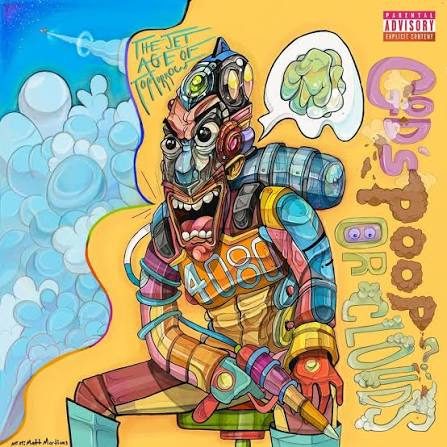
    Currently working on closing the gap between having an idea and executing it, so I’m writing this on a plane, 8:50 PM, listening to God’s Poop or Clouds? for the umpteenth time, letting my fingers gallop alongside my thoughts while I try to convey how influential and impactful Odd Future was and is, not only to the black community but to young creatives in general.

    What being an “alternative rapper” meant 20 years ago and what it means today aren’t the same thing. And largely in part, we can thank Odd Future for that. That’s not to withhold flowers from Outkast (best musical duo OAT btw), Kanye West, or Mos Def as standouts in this timeline, or to say that they weren’t pushing the boundaries of what rap is. Nonetheless, it is to say that Odd Future made a category of their own.

    Y’all have to understand (me directly talking to oldheads and naysayers) what Odd Future represented beyond the antics and the music. These were the creatives who forcefully reshaped what it looked like to be a black rapper, but more importantly, a black creative in America for a new generation. A walking juxtaposition, if you will, one that mainstream culture had never been fed, but more importantly, one that black culture hadn’t tasted and, I would argue, hasn’t experienced since. To a community (rap) that has been historically and almost pridefully rooted in homophobia, misogyny, and gang culture, Odd Future was the matcha in a world full of coffee.

    Odd Future is the personification of the “weird kids” getting popular. Their rise represented a wide diaspora of creatives in one collective, spanning music (performance and production), fashion, film (acting and directing), and skateboarding; they covered the waterfront. When the collective was just beginning, their fucking around and just being themselves was actively dismantling the broader monolith of what rap culture was to the mainstream media. I feel like I always say this (and maybe the people in my echo chamber are tired of hearing it, but people forget this is like my third entry, we don’t have a history like that), but MY GOD, YOU HAVE TO BE SO FUCKING CREATIVE, FREE, AND FUN TO MAKE SHIT LIKE THAT!!! As an adult, their work resonates with me so much more because it embodies a certain mischievous curiosity and juvenile buoyancy that I will forever strive to never lose.

    Currently, we can look back at the group’s rise and collectively acknowledge that they were ahead of their time, but that was not the general consensus back in the day. While the majority of the public saw a loud, obnoxious, nuisance-causing gaggle of youngsters, the next generation of creatives saw pioneers of the industry. They were a rowdy, unapologetic, flamboyant, bisexual, and eccentric bunch rewriting the script for what a rapper could be, all while wearing knee-high neon-colored socks, snapbacks, and polos buttoned to the top. Before the group’s fame (or any of their individual members, for that matter), their sound and aesthetic were seen as childish, unprofessional, and chaotic. Time has come to prove what those then-kids knew all along: they were innovators of a movement, helping usher alternative/indie black culture into the next decade.

    Circling back to the TV Girl shots, TV Girl drew heavy influence from 80s/90s hip-hop sampling, electronic music, ambient music, and even hyperpop. Creating their own sound within indie-pop, they have a signature that is original yet nostalgic and hypnotically melancholic. One can appreciate the alternative culture they represent within their respective genres, especially in their early days. Reaching back to their arguably mainstream breakthrough with their 2014 album French Exit (no one will ever understand the personal impact this body of work had on me ages 19–21) and their ensuing 2016 album Who Really Cares (perfect dark outside music), ask any bitch on the block who was even remotely as “indie” or “alternative” as a teenager, and they will have a personal and/or emotional connection to those works. Odd Future is the same thing for black kids who were labeled as “weird,” AKA just different.

    Bringing a microscope to The New Jet Age of Tomorrow (ATL on top asffff), a duo including Odd Future members producer-singer Matt Martians and producer-rapper Pyramid Vritra, I am here to shamelessly shout from the rooftops about their 2017 album God’s Poop or Clouds?, which has been unremittingly on repeat, front to back and back to front, for the past two weeks now. Y’all know that clip of Beyoncé being like “people aren’t making albums anymore, they just make quick little singles, and they burn out.”? Embedded in this 57-minute album is the antithesis to that statement. Encompassing 15 tracks, there is no shortage of experimentation or novelty. Still, magically, the sound of the whole project is so succinct and unabridged, with no two tracks ever bearing even an inkling of resemblance. The album is sonically driven by electronic and alternative beats, yet remains grounded in R&B, rap, and funk. Heavily reminiscent of The Internet’s 2014–2018 sound tbh. It’s thrillingly creative, it’s unexpected, it’s complex while still being frolicsome, it still stands out almost 10 years later, and ladies and gentlemen, it is God’s Poop or Clouds?!!!! 

    Side note highlight: A lot of the tracks are “double songs” with a beat or BPM drop/switch within the same song, which is such a dying art on albums. Justin Timberlake did it superbly with several songs on FutureSex/LoveSounds. Really buttons the seams on an album, in my opinion.

    Also, I really love the album art for this. It reminds me of the super-saturated, fluid aesthetic of KAYTRANADA’s 99.9% album cover. I love whatever that style of graphic design is called.

    In a world where creativity is currency, I find it hard not to harbor feelings of inferiority at times when it seems as though I have dollar bills, but the rest of the creative zeitgeist operates on coins. Nonetheless, I am tirelessly reminding myself that there is no reason to feel inadequate. HOPECORE ALERT: Being different is a good thing, even if it’s not externally validated. So maybe your art doesn’t suck; maybe your work is just ahead of its time, and you need to keep expressing and refining your creative ideas until you find your crowd. So the next time you’re hating on you or someone else is hatin on your shit, instead of critiquing and bitchin’, being mad as fuck, just admit not only are you talented, you’re rad as fuck!